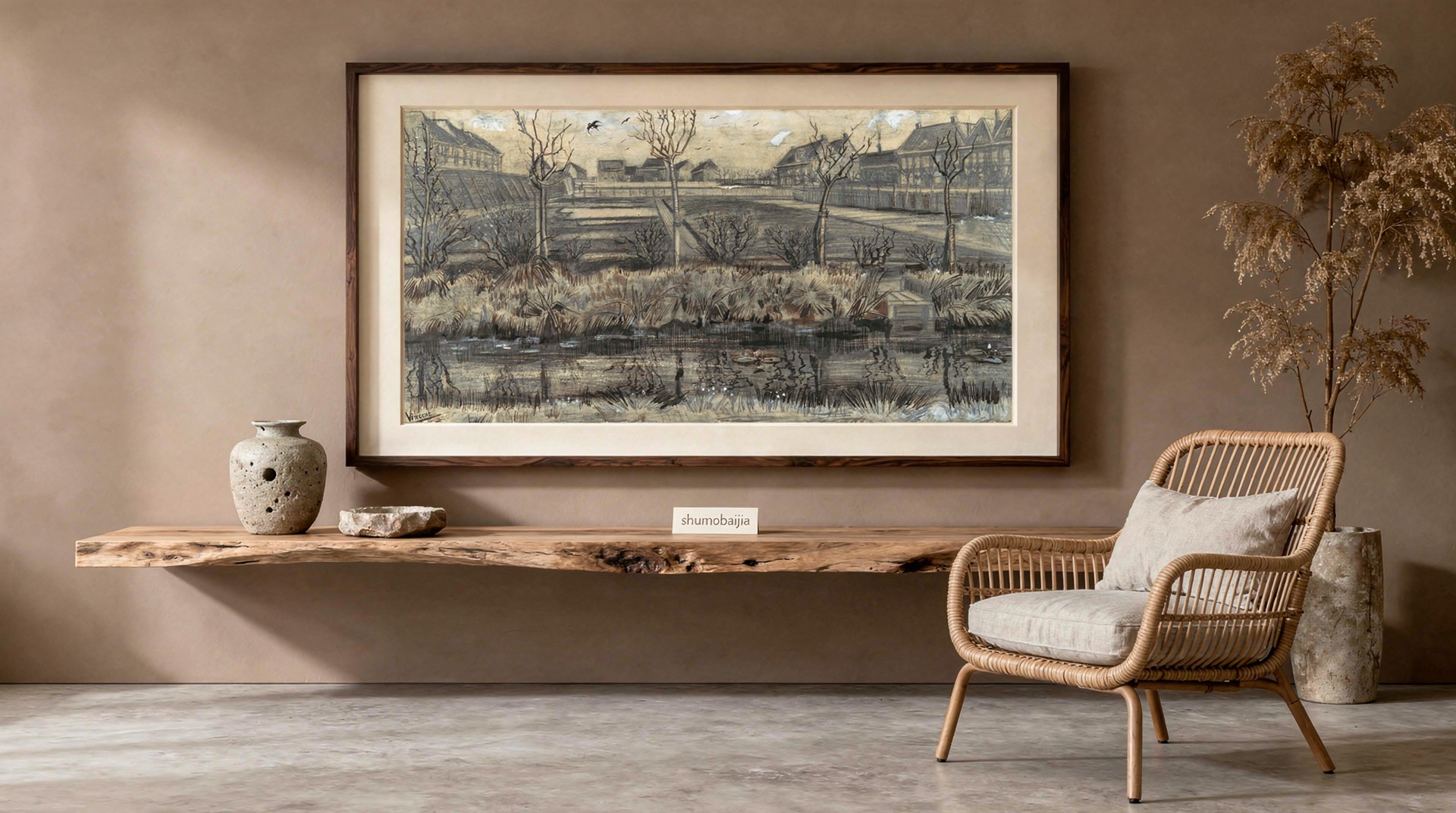
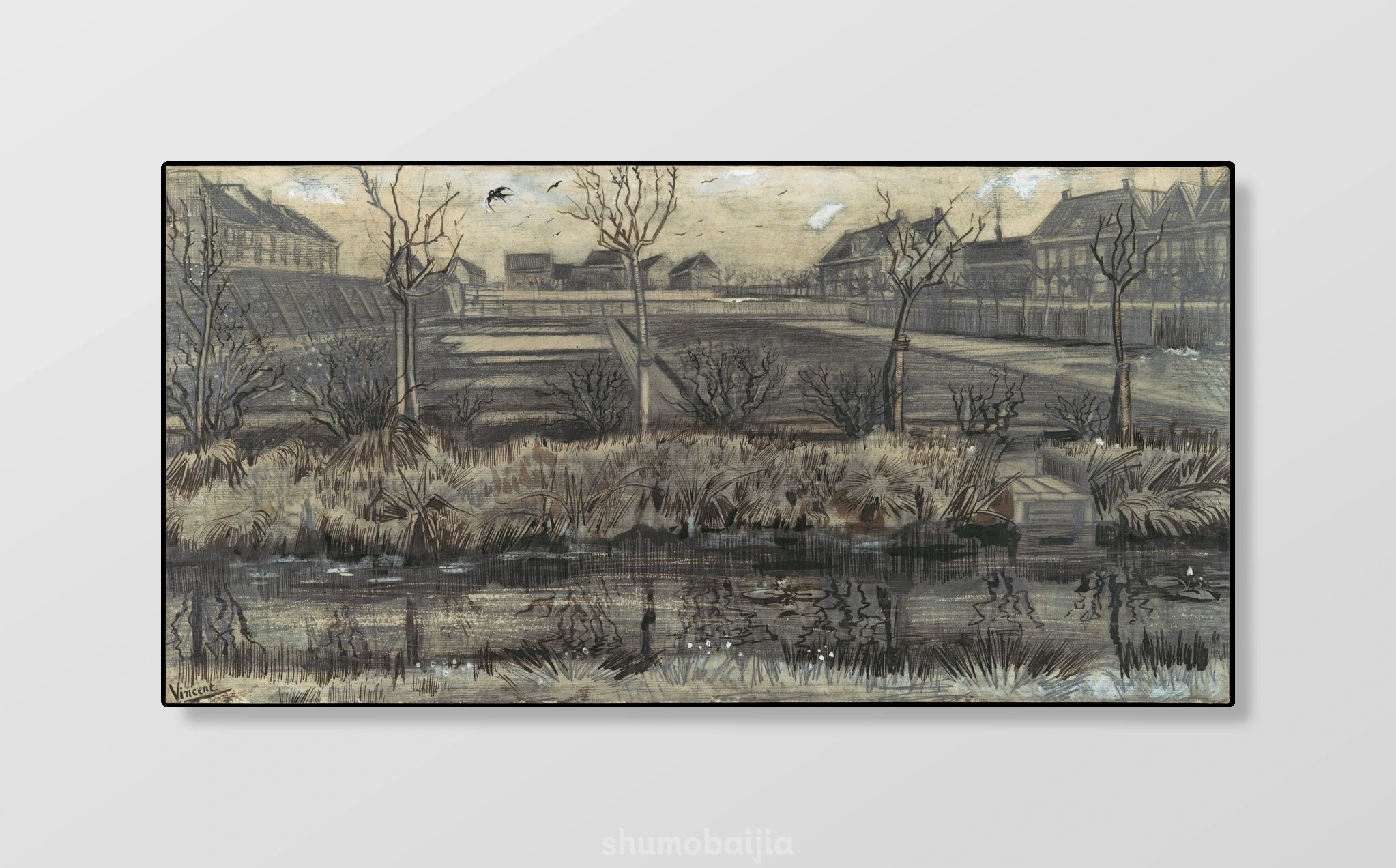
About the Work
Vincent van Gogh (1853–1890)
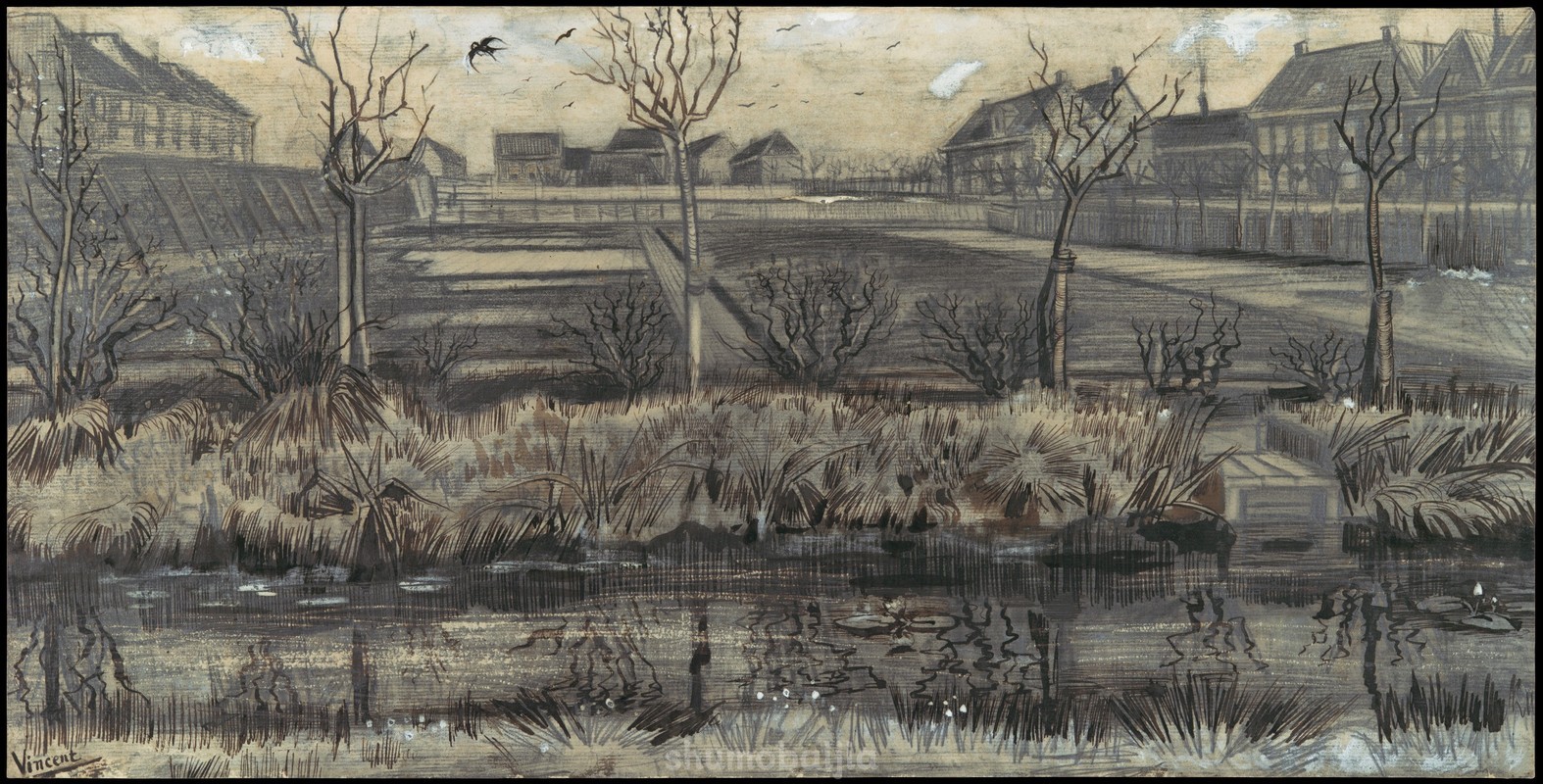
This drawing was created during Van Gogh’s early period in The Hague, around 1882. At this time, he was deeply influenced by the realism of the Hague School, focusing on depictions of rural and suburban Dutch life. The work captures a canal scene in late winter or early spring. Bare trees and distant brick houses stand under a muted sky, conveying a sense of quietude and austerity. It is a significant example of the artist’s formative years, showing his keen observation of light and shadow and his developing command of line.
Detail: Line and Texture
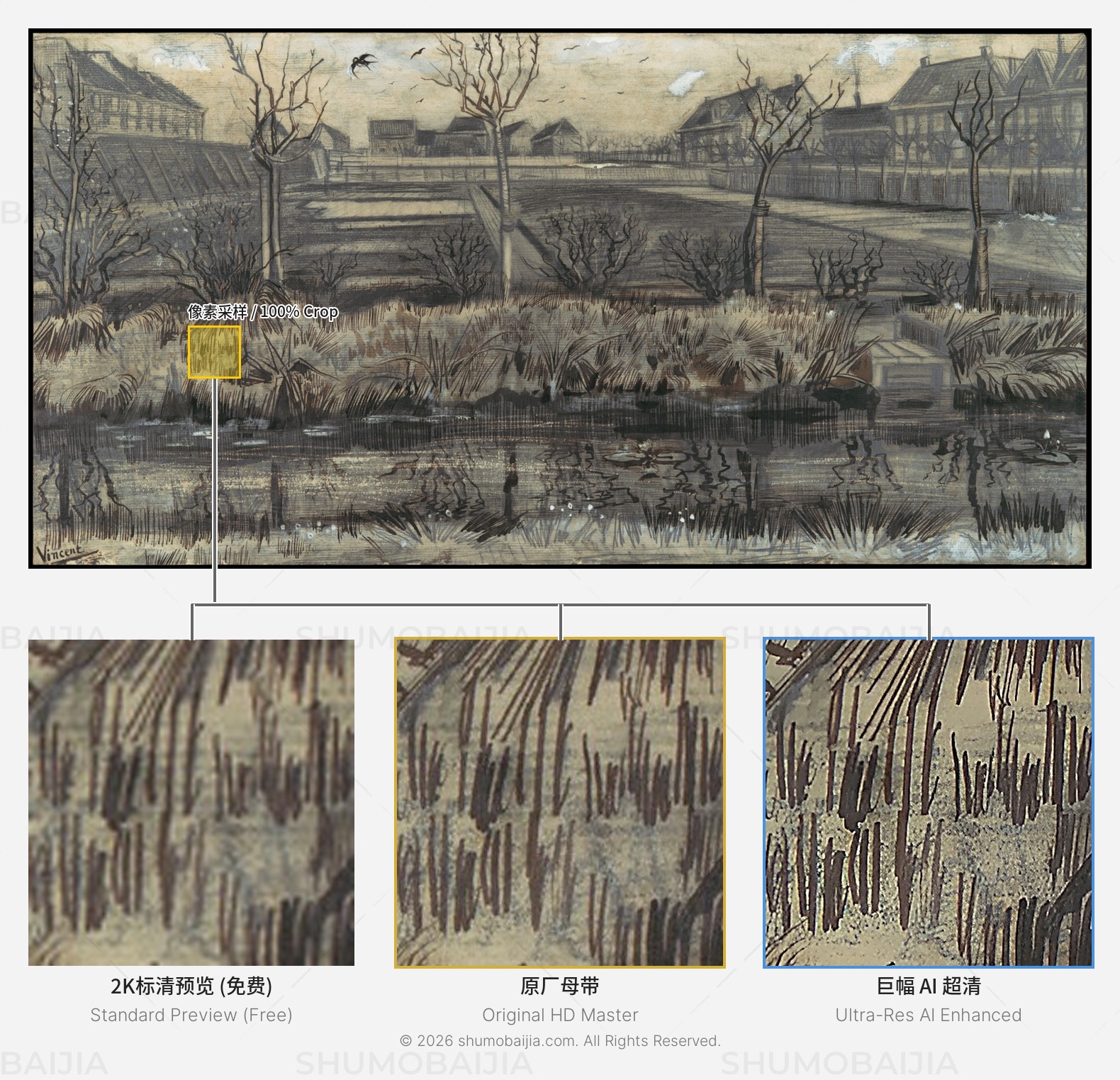
Van Gogh used dense hatching and energetic lines to render the foreground reeds and reflections on the water. This technique builds a deep sense of space and texture. The skeletal forms of the trees, stretching towards the sky, are a recurring motif that suggests the cycles of nature and a certain resilience. The drawing is not merely a topographical study, but an expression of the artist’s profound connection to the natural order.
Display
The work’s restrained palette and strong linear quality are well-suited to a variety of interiors. Its panoramic format is effective when placed in a study, library, or hallway, particularly above a console table or desk. A simple, narrow frame in matte black metal or dark walnut wood would complement the drawing’s composition without distraction.