Overview
Title, Artist, and Format
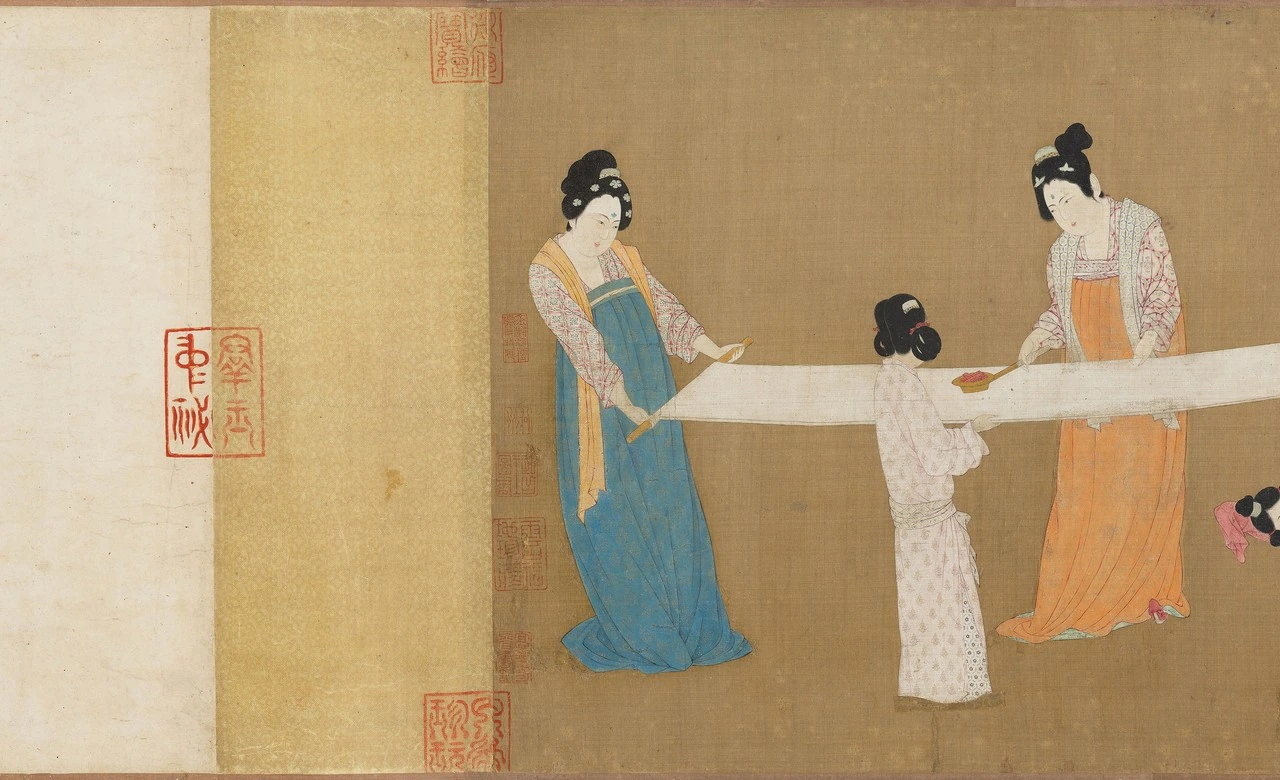
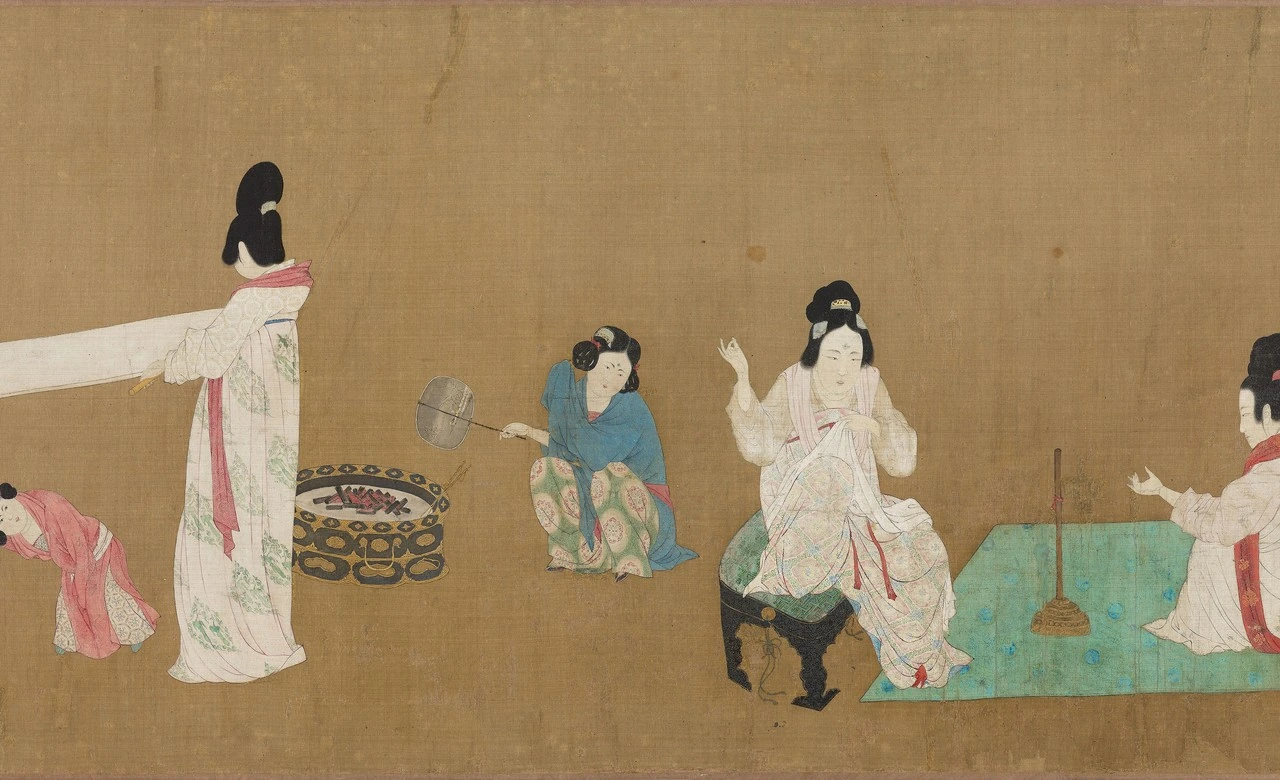
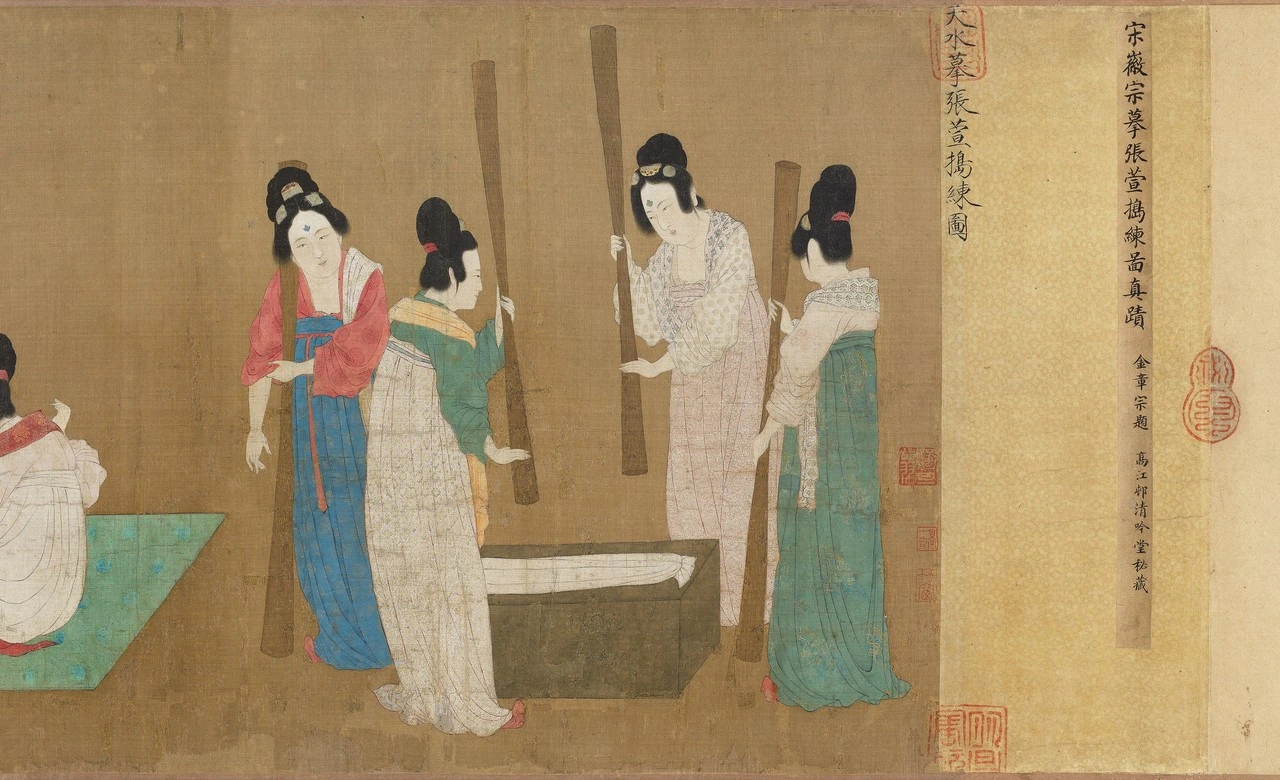
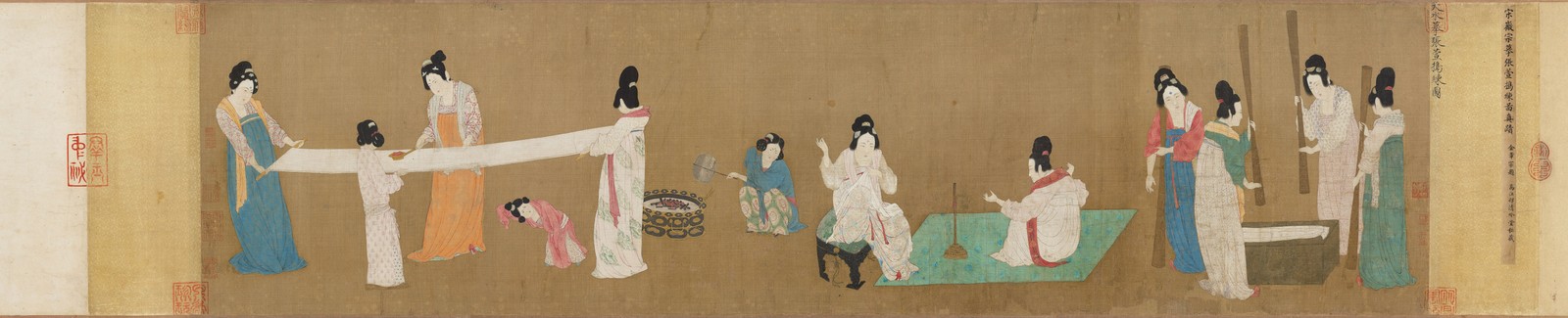
Northern Song, Emperor Huizong (Zhao Ji) after Tang painter Zhang Xuan, Pounding Silk. Ink and color on silk, handscroll. Boston Museum of Fine Arts.
Microscopic Texture and High-Resolution Detail
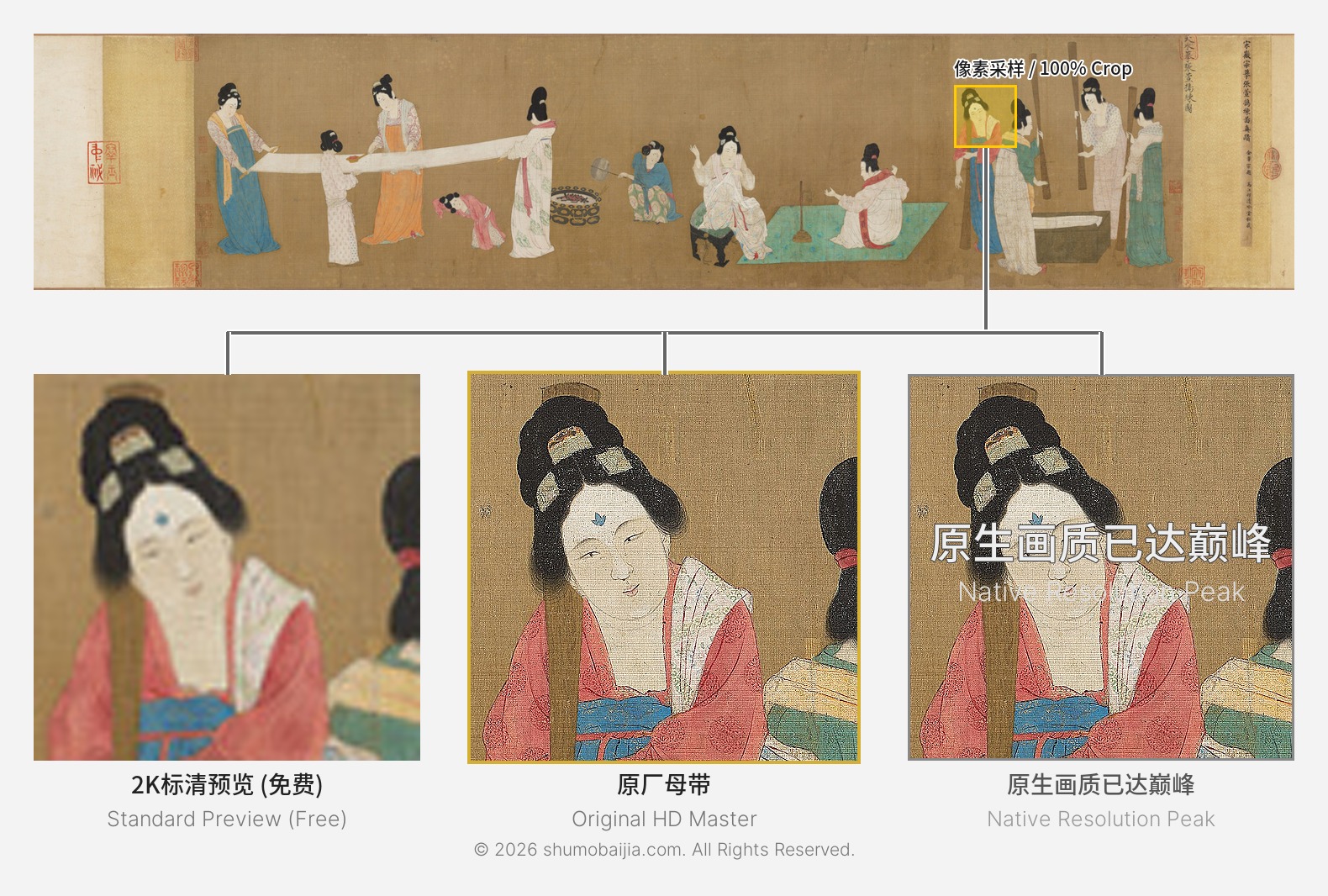
Detail of a court lady’s face and coiffure. At high resolution the characteristic Tang “plump-cheeked” physiognomy is clear; individual hair strands (silk-thread brushwork), collar patterns, and the fine crackle of aged silk pigment are visible — details lost at lower resolution.
Historical Background
This scroll is Emperor Huizong’s copy of a masterpiece by the Tang painter Zhang Xuan. The original is lost. The facsimile faithfully reproduces the High Tang court-lady aesthetic of “full cheeks and rounded figures” while incorporating the meticulous brushwork of the Song academy style. The composition unfolds in three sequential groups: pounding silk, winding thread, and ironing and sewing. Huizong’s brush is vigorous yet delicate; his color rich and elegant. The painting vividly records both the leisure and labor of palace women, making it a primary visual source for Tang costume, custom, and Song painting technique.
Iconography and Cultural Significance
“Pounding silk” refers to the finishing process of softening and smoothing woven silk. The composition balances density and openness; figures display varied expressions — concentration in work, tenderness in interaction. A child playing beneath the stretched silk and a girl glancing back while tending the fire add spontaneous life. The work stands as a pinnacle of Tang court-lady painting and embodies the Song imperial house’s reverence for and transmission of earlier artistic heritage, symbolizing the flourishing of sericulture and the dignity of women’s labor in Chinese civilization.
Provenance and Authentication
The scroll bears an end-title label reading “Emperor Huizong after Zhang Xuan, Pounding Silk” and carries successive connoisseur and collector seals.
Display Note
The scroll suits a dark-stained, narrow-profile wood frame. It reads well on a principal wall in a study or tea room finished in off-white or pale grey textured plaster, which sets off the warm tone of the aged silk. A warm-toned floor lamp or antiquarian shelf nearby, with a blue-and-white porcelain vase or scholar’s implements, evokes a Tang-Song scholarly atmosphere without pastiche.