
Overview
Title, Artist, and Dimensions
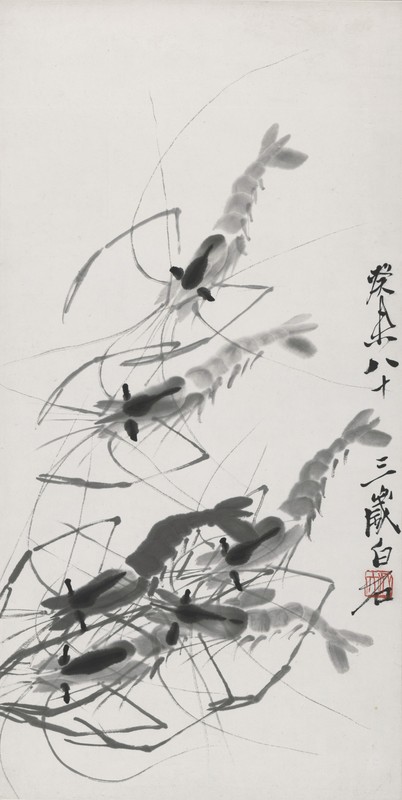
Qi Baishi, Shrimp, ink on paper, modern Chinese hanging scroll, approximately 136 x 68 cm (53 ½ x 26 ¾ in).
Micro-texture and High-Definition Detail
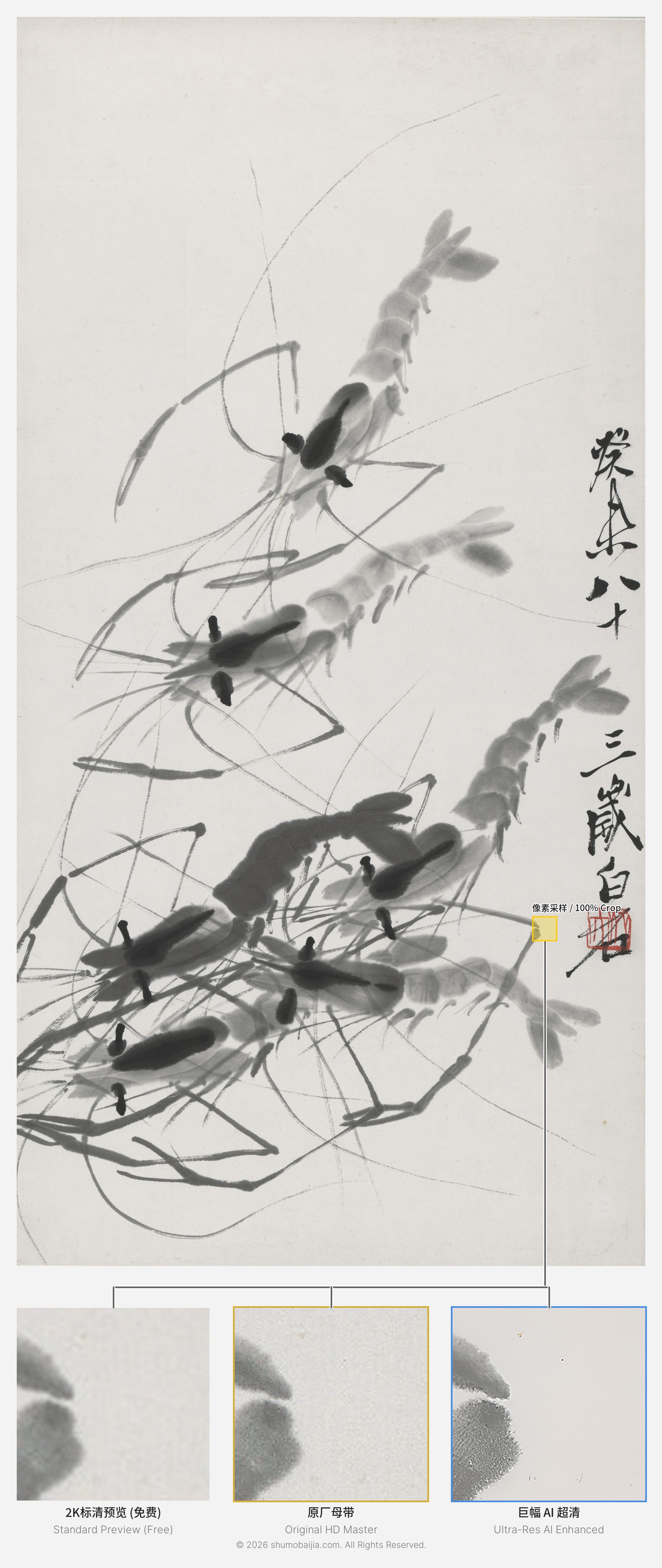
The artist’s inscription and seal are visible here. Magnified, the texture of the seal paste, the carving of the seal, and the dry brushwork at the end of the strokes are discernible. Such details are lost in lower-resolution reproductions.
Context
This work exemplifies Qi Baishi’s mature technique in painting shrimp. His approach evolved over decades, from early realism to a refined abstraction, achieving a balance between likeness and unlikeness. The artist uses minimal brushstrokes to delineate the shrimp’s form, with darker ink for the eyes and head, and lighter washes to suggest the transparency and segmentation of the body. The long antennae are rendered with resilient lines, conveying movement and vitality.
Symbolism
In Chinese culture, shrimp are often associated with vitality, upward mobility, and auspiciousness. Qi Baishi’s shrimp are a classic motif in Chinese ink painting, symbolizing elegance, agility, and the literati’s appreciation for natural life. They also reflect Daoist philosophical concepts of water’s benevolence and the spiritual essence of all things.
Inscription and Seals
The inscription on the right reads: ‘Guiwei, eighty-three sui, Baishi.’ Below it is a white-character seal (likely ‘Baishi’).
Display Recommendation
This work complements interiors with a modern Chinese, minimalist, or Zen aesthetic. A slender frame in walnut or ebony would suit, hung on a wall in off-white, light grey, or a plain white finish to highlight the ink tones. A solid wood console table below, adorned with an orchid or a scholar’s rock, would create a refined atmosphere for a study or living room.